Choosing contact lenses sounds straightforward. It rarely is. The first time most people look at their options, they realize how many variables are involved. Daily or monthly? Soft or rigid? Moisture-focused? Brand-specific?
If you’re trying to understand how to choose the right contact lenses for your eyes, the real answer starts with your eyes themselves. Not the packaging. Not the trend. Your prescription, your comfort level, and how long you actually wear them each day.
What Your Eyes Actually Need
Every contact lens corrects a specific refractive error.
Nearsighted (myopia)? You’ll need minus power
Farsighted (hyperopia)? That requires more power
Astigmatism? Standard lenses may rotate and blur; toric lenses are built to stabilize vision.
Difficulty reading up close after 40? That’s usually presbyopia, and multifocal lenses help balance near and distance focus. This is why a proper eye exam for contacts matters. A contact lens prescription includes base curve and diameter, not just diopters. Many first-time wearers underestimate how important the fitting process really is. The wrong curvature alone can irritate, even if the power is correct.
Skipping professional guidance almost always leads to discomfort later.
Types of Contact Lenses: What Actually Changes
There isn’t one “best” lens. There are categories. Prescription contact lenses correct standard vision problems like myopia or hyperopia.
Toric lenses, also called prescribed lenses, are designed to correct astigmatism and remain in a fixed position on the eye.
Multifocal lenses are used to provide support to many viewing distances using a single lens.
Contact lenses of all colors alter. Even lenses used to improve cosmetics must be based on a prescription. Eyes are indifferent to whether a person aims at enhancing beauty or correcting vision.
Daily disposable contact lenses are usually the simplest place to start, in case you are new to contacts. Fewer handling steps. Fewer cleaning errors.
Soft vs Hard Contact Lenses
This choice affects long-term comfort.
Soft contact lenses
Soft contact lenses are flexible and adapt quickly. Most people barely notice them after a few hours. They’re available in daily, biweekly, and monthly options.
Rigid gas permeable (RGP)
Rigid gas permeable (RGP), sometimes called hard contact lenses, feel firmer at first. They take patience. But they often provide sharper vision for higher prescriptions and irregular corneas. They also resist protein deposits better than soft lenses.
Soft lenses usually feel easier, while RGP lenses often perform more sharply. The “right” option depends on your specific correction needs.
Monthly vs Daily Contacts: Be Honest About Habits
The monthly vs daily contacts debate isn’t just about cost.
Daily disposables are worn once and discarded. No storage case. No cleaning solution. Lower infection risk. They’re commonly recommended for sensitive eyes and allergies.
Monthly lenses are reused for up to 30 days. They’re cost-effective long-term, but only if cleaning is consistent. Proper lens cleaning solutions and case hygiene are non-negotiable.
If you know you’ll occasionally skip cleaning, daily lenses are safer. That’s just practical reality.
Lens Material and Comfort Matter More Than Brand Hype
Material affects oxygen flow. And oxygen permeability directly affects eye health. The lenses made of silicone hydrogel are able to transmit substantially more oxygen through the lens than the legacy hydrogel materials. That is why they are usually prescribed to be worn long enough to prevent dry eyes.
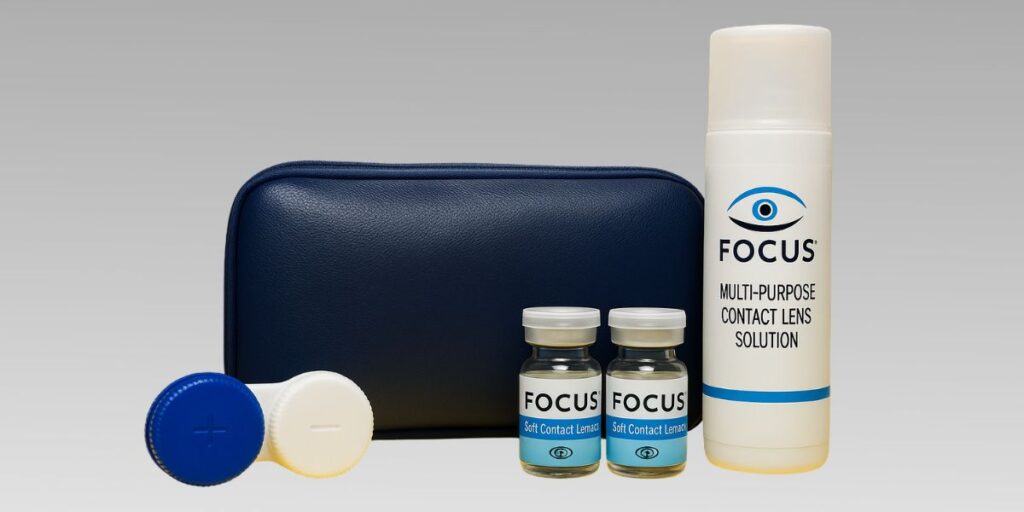
A number of the known brands of contact lenses, such as Acuvue, Alcon, CooperVision, Optiflex Lens and The Focus Lens, provide sophisticated materials like silicone hydrogel and water gradient to enhance the retention of moisture.
When the major concern is dryness, these designs can be regarded as one of the most suitable contact lenses in the case of dry eyes. Comfort should remain stable throughout the day. If your lenses feel heavy by evening, something isn’t matching your eye chemistry.
Choosing Contact Lenses Based on Lifestyle
Lifestyle influences lens success more than many people expects.
- Active schedule? Daily lenses reduce debris buildup and movement issues.
- Long screen hours? Reduced blinking increases dryness. High-oxygen lenses help compensate.
- Sensitive eyes? Your optometrist may recommend specific brands known for smoother edges or hydration retention.
And if you plan on wearing lenses for long hours regularly, choosing lenses for long wear requires careful attention to material and replacement schedule. It’s not about what works for someone else. It’s about what holds up during your routine.
Understanding Your Contact Lens Prescription
Your prescription includes:
- Sphere (power in diopters)
- Cylinder (astigmatism correction)
- Axis (orientation)
- Base curve
- Diameter
Plus, numbers correct farsightedness. Minus numbers correct nearsightedness. Never assume your glasses prescription equals your contact prescription. The fit difference matters. A proper contact lens fitting ensures alignment with your cornea. Routine follow-ups protect long-term eye health with contact lenses.
Are Contact Lenses Safe?
Yes. When handled properly. Most problems happen when wear time is extended or hygiene slips.
- Wash your hands before handling lenses
- Use appropriate lens cleaning solutions
- Replace storage cases regularly
- Avoid sleeping in lenses unless approved
- If discomfort feels unusual, or if there is redness, pain, or persistent blur, don’t wait it out
- Contact lens safety depends on consistency
Contacts Lenses vs Glasses
Contact lenses offer wider peripheral vision and no frame obstruction. Glasses require less maintenance. Neither improves eyesight permanently, but both serve as reliable vision correction solutions when prescribed correctly. Many people alternate depending on the situation. There’s nothing wrong with that.
Final Thoughts
If you’re still wondering how to choose the right contact lenses for your eyes, focus on alignment, prescription accuracy, material compatibility, and daily routine. There isn’t a universal winner. There’s only what fits your eyes properly. The right lenses shouldn’t demand attention. They should simply work with steady comfort, consistent clarity, and healthy eyes at the end of the day. That’s the real goal.